Herpes zoster & Post herpetic Neuralgia.
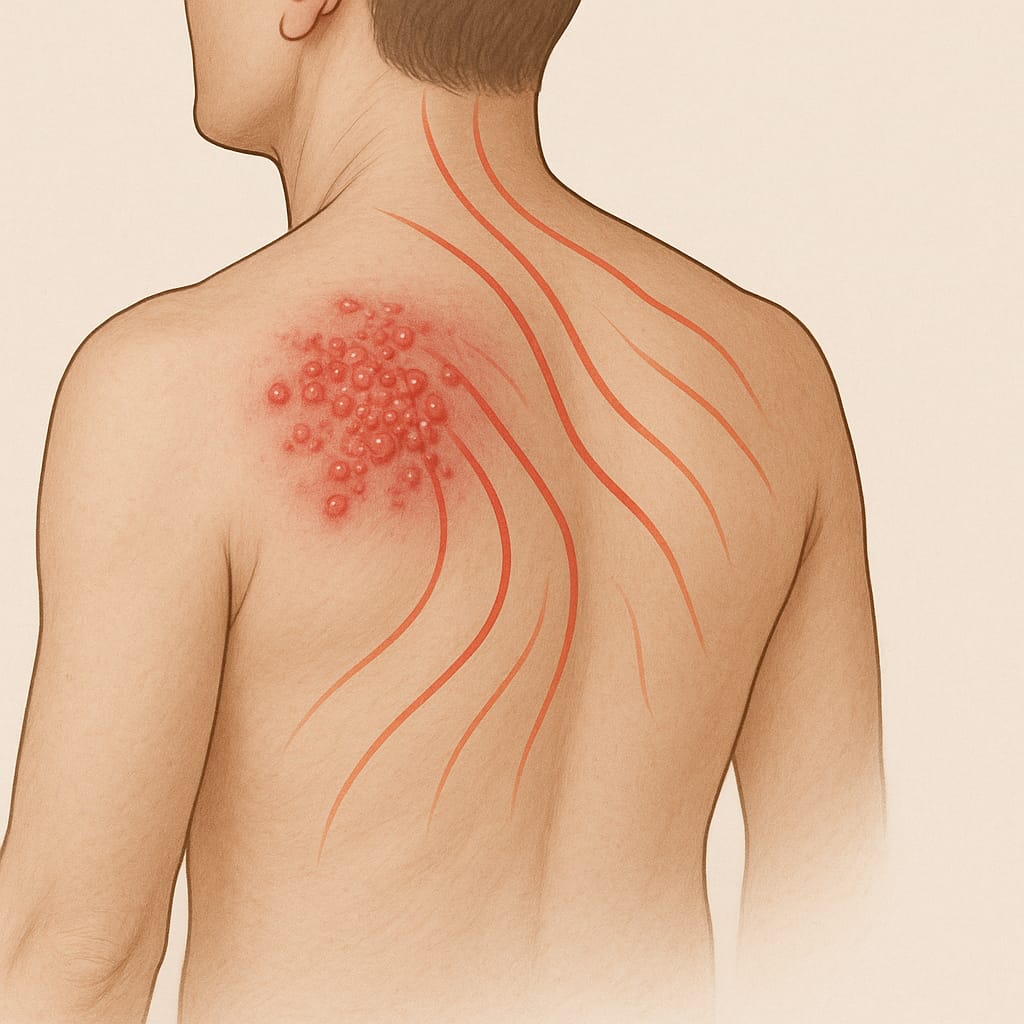
Herpes Zoster and Post herpetic Neuralgia
Herpes zoster, also known as shingles, is a viral infection caused by the varicella-zoster virus, the same virus that causes chickenpox. After someone recovers from chickenpox, the virus stays in the body in a sleeping state. Years later, it can wake up and cause herpes zoster.
Herpes zoster usually starts with pain, burning, or tingling in one area of the body. A few days later, a red rash with fluid-filled blisters appears. This rash usually shows up on one side of the body, often on the chest, back, or face. The blisters can be painful and may take two to four weeks to heal.
Most people recover completely, but some may continue to feel pain in the area even after the rash has gone. This condition is called postherpetic neuralgia. It happens because the virus has damaged the nerves. The pain can be sharp, burning, or aching, and it may last for months or even years in some cases.
Who is at risk?
- People over 50 years old
- Those with weak immune systems
- Individuals who had chickenpox earlier in life
How is it treated?
Antiviral medications can help shorten the illness and make symptoms less severe if taken early. Pain relief medicines, skin creams, or special nerve pain medications may be used to reduce discomfort. In cases of postherpetic neuralgia, treatment may include medications that calm the nerves, physical therapy, or nerve blocks.
Can it be prevented?
Yes. There is a vaccine available to help prevent herpes zoster or reduce its severity. It is usually recommended for people over 50 years of age.
If you experience a painful rash or unusual nerve pain, especially on one side of the body, contact your doctor as soon as possible. Early treatment can help you feel better faster and may lower the risk of long-term nerve pain.
Book your consultation now and take the first step towards a pain-free, comfortable life.

Address: 301,Near Afeem Kothi, Civil Line, Gonda, Uttar Pradesh 271001
Phone:
63872 00048
Email:
info@homeotreatwithdrajeet.in
Quick Links
Quick Links
Follow Us



© 2025 Homeo Treat with Dr. Ajeet . All rights reserved.